

A Complete Guide to Medical Office Building Roof Design
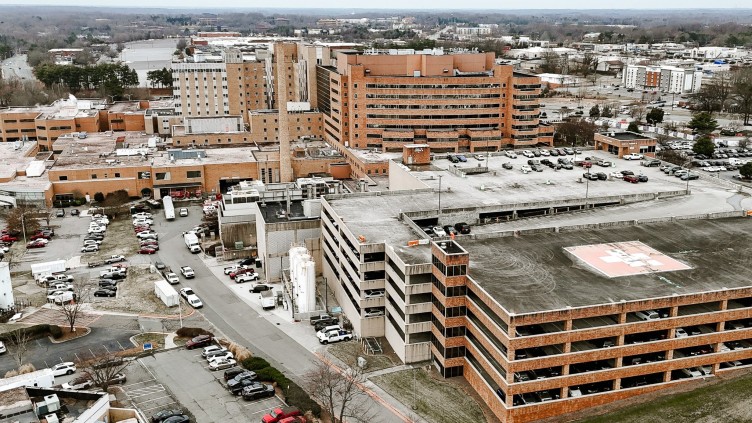
Medical office buildings (MOBs) look like standard commercial structures from the outside, but the engineering and planning that goes into their roofing systems is anything but ordinary. From the sheer volume of rooftop mechanical equipment to strict infection control requirements, the roof of a medical office building carries responsibilities that most commercial roofs never have to meet.
If you're planning, developing, or renovating a medical office building, here is everything you need to know about roof design, including the right materials, the critical performance requirements, the code considerations, and the mistakes that are most expensive to make.
Why Medical Office Building Roofs Are Different
Most commercial roofing projects center around one question: how do we keep water out? In healthcare facilities, the stakes are even higher. Moisture intrusion can trigger mold growth, compromise sterile surfaces, and in worst-case scenarios, force temporary closure of clinical spaces.
Beyond moisture, medical office roofs have to manage:
- Heavy rooftop equipment loads: Multiple HVAC air handling units, exhaust fans, condensers, medical gas venting, and emergency generator exhaust stacks
- Strict ventilation performance: The roof assembly must support systems designed to maintain positive and negative pressure zones throughout the building
- 24/7 operational continuity: Unlike a retail or office building, clinical spaces often can't simply close during a re-roofing project
- Chemical and fume exposure: Sterilization exhaust and medical gas discharge can degrade standard roofing membranes over time if the wrong materials are specified
Getting the roof wrong in a medical office building isn't a warranty claim. It's a patient care problem.
The Right Roofing Materials for Medical Office Buildings
Not every commercial membrane is appropriate for healthcare applications. Here's how the most common options compare:
TPO (Thermoplastic Polyolefin): TPO is one of the most widely used membranes in medical office construction. Its high reflectivity helps reduce cooling loads, which is an important factor in buildings where HVAC systems run at high capacity around the clock.
Adhered TPO systems (rather than mechanically fastened) are preferred in healthcare because they support the pressurized building envelope that clinical spaces often require. TPO also performs well under foot traffic from routine HVAC maintenance.
PVC (Polyvinyl Chloride): PVC membranes offer an important advantage in healthcare settings: chemical resistance. In areas where rooftop exhaust stacks discharge sterilization fumes, cleaning chemical vapors, or medical gas byproducts, PVC provides a more durable barrier than many alternatives.
PVC is also Class A fire-rated in most configurations, which aligns with the stricter fire requirements for healthcare buildings under the IBC.
Modified Bitumen: Two-ply modified bitumen systems are often specified for higher-end healthcare facilities that demand redundant layering. The multi-ply approach creates built-in backup: if one layer develops a breach, the system continues performing. These systems excel in facilities with heavy rooftop foot traffic, since maintenance technicians servicing multiple large HVAC units may access the roof frequently.
Rooftop Equipment: Planning for the Load
One of the most common and costly mistakes in medical office building design is underestimating the rooftop equipment footprint. Medical facilities have more air handling units, more exhaust fans, and the infrastructure to support specialized spaces like labs, imaging suites, and procedure rooms.
A well-designed medical office roof must account for:
- Structural dead loads from air handling units, which can weigh several tons each.
- Live loads from maintenance foot traffic. Code requires rooftop walkway pads or pavers near equipment to prevent membrane damage during servicing.
- Vibration transmission from large mechanical units, which requires proper equipment curb design and isolation.
- Pipe and conduit penetrations, which must be flashed and sealed with medical-grade details to prevent water intrusion around every penetration
- Equipment placement and clearance. Units must be positioned to allow coil removal and filter replacement without damaging the surrounding membrane.
Early coordination between the roofing contractor, mechanical engineer, and structural engineer is essential. For example, discovering that a 5-ton air handler exceeds the deck's live load capacity during construction is an extremely expensive problem.
Infection Control and the Roof's Role
Your roof plays a critical role in healthcare infection control. Several roofing design decisions impact a facility's ability to maintain clean air and prevent contamination:
- Air intake and exhaust separation: Outdoor air intakes for clinical spaces must be located away from exhaust fan discharge points. Code and ASHRAE Standard 170 (Ventilation of Health Care Facilities) govern minimum separation distances, and the roof layout must be designed with this in mind from day one
- Negative pressure exhaust systems: Airborne infection isolation rooms (AIIRs) use dedicated exhaust systems that terminate on the roof, discharging contaminated air away from intakes and occupied areas. The roofing membrane must be detailed to accommodate these stacks without water intrusion
- Roof leak prevention: Even a minor leak over a sterile prep area or clinical workstation can introduce biological contamination, forcing temporary closure and deep cleaning. Zero-tolerance for moisture intrusion should be the design standard in healthcare
- Moisture and mold management: Proper insulation design and vapor control prevent condensation within the roof assembly itself, which can become a hidden mold source above clinical ceilings
Insulation Strategy for Healthcare Roofs
Energy efficiency in a medical office building helps support a stable indoor environment for sensitive equipment and vulnerable patients. The roof insulation system plays a central role in both.
Key considerations for healthcare roof insulation:
- Continuous insulation above the deck is preferred over assembly-only approaches, as it eliminates thermal bridging through structural members that can create condensation points.
- Polyisocyanurate (polyiso) insulation is commonly specified for its high R-value per inch, which helps meet IECC energy code requirements without adding excessive dead load to the roof deck.
- Tapered insulation systems ensure positive drainage toward drains and scuppers, preventing water ponding — a particular concern on low-slope roofs carrying heavy equipment that can deflect the deck slightly over time
- Low-VOC and TCPP-free insulation products should be specified where installation is occurring near or above occupied clinical spaces
Meeting the energy code isn't optional. ASHRAE 90.1 and the IECC set minimum R-values for commercial roof insulation that vary by climate zone. Medical facilities (which often fall under stricter occupancy classifications) may face additional state or local energy requirements.
Drainage Design: Get It Right Before Construction
In a medical office building, drainage failures have consequences well beyond a wet parking lot. Ponding water accelerates membrane degradation, adds unexpected structural load, and creates the conditions for roof leaks directly over clinical space.
Best practices for medical office roof drainage:
- Size primary drains for the full design rain event, accounting for the added drainage area created by rooftop equipment blocking natural flow paths
- Install secondary (overflow) drains or scuppers as required by IBC. These must be functional, not just present
- Use tapered insulation to direct water to drains rather than relying on structural slope alone
- Coordinate drain locations early with interior plumbing design. Drain leaders must route through the building without conflicting with ceiling-mounted medical equipment or infection control barriers
Planning a Re-Roofing Project Around Clinical Operations
If the building is already occupied and operational, re-roofing a medical office facility requires a level of coordination rarely needed in other commercial projects. Noise, vibration, odors from roofing adhesives, and the risk of debris falling near HVAC intakes all have to be managed with clinical-grade caution.
Strategies that make a difference:
- Schedule the most disruptive work during off-hours or on days when high-acuity spaces are not in use
- Use low-odor, low-VOC adhesives and materials throughout the project
- Temporarily relocate HVAC intakes or install protective screens during tear-off phases
- Maintain a real-time communication plan with the facility manager so staff can respond quickly if unexpected conditions arise inside the building
The contractor's ability to phase work carefully (starting up and shutting down based on the clinical staff's needs) is as important as their technical roofing expertise.
Choosing the Right Roofing Partner for Healthcare Projects: Applied Roofing Solutions
A medical office building is a mission-critical facility. The roofing contractor you choose should understand how the roof integrates with the building's mechanical systems, infection control protocols, and operational realities.
At Applied Roofing Solutions, we have direct experience with the unique demands of healthcare and medical office construction. From pre-project coordination with your mechanical engineers to low-disruption installation around active clinical schedules, we deliver roofing systems designed to protect patients, staff, and your investment for the long term.
Our healthcare roofing solutions are tailored to medical office buildings throughout the NC Piedmont region, including Raleigh, Greensboro, Reidsville, Madison, Eden, Mayodan, Graham, Burlington, Mebane, and beyond. Explore our portfolio or contact our commercial roofing experts to get started today!


