

Roofing for College & University Campuses
Roofing for College and University Campuses: What Makes It Different
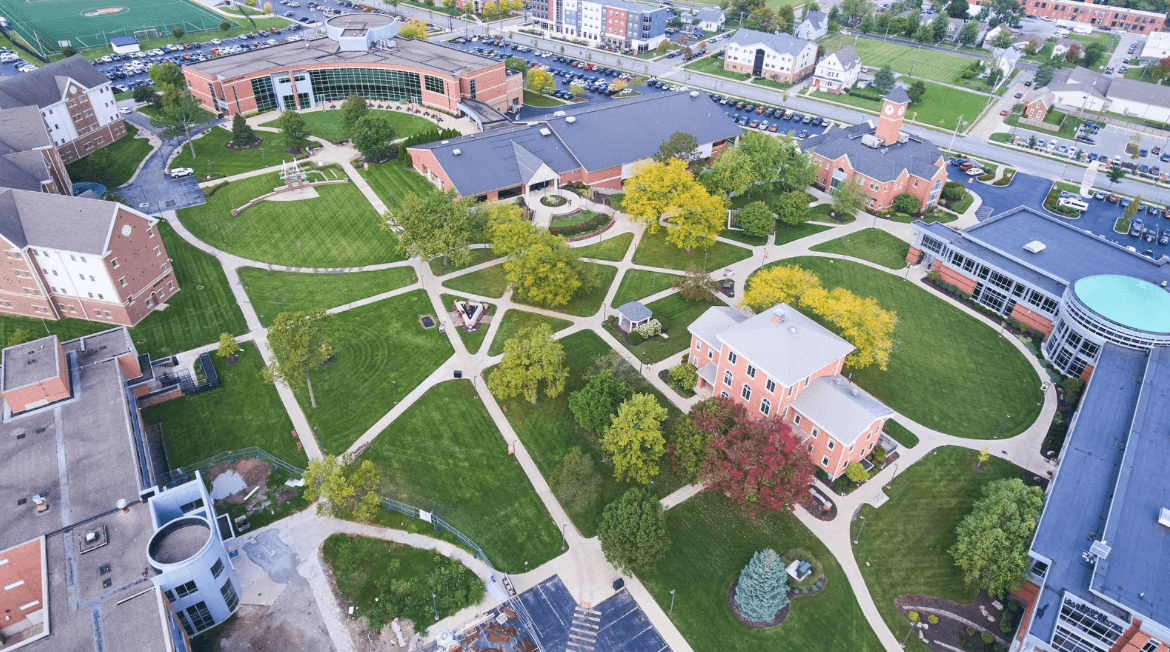
Managing roofing across a college or university campus is one of the most difficult aspects of facility management. It's a large portfolio of structures with varying ages, materials, budgets, and priorities, all under the responsibility of a facilities team that's working hard to keep the campus running.
Let's explore what makes campus roofing different and how to approach it strategically.
The Unique Challenges of Campus Roofing
Higher education facilities carry a set of roofing challenges that simply don't exist in the same way for a single commercial building or industrial plant.
Architectural diversity
A university campus may contain dozens of building types spanning multiple architectural eras. Steeply pitched slate roofs on historic buildings, flat membrane systems on modern classroom facilities, metal roofing on athletic complexes, and ornate copper detailing on landmark structures may all coexist on the same 50-acre campus. Each system requires specialty expertise, materials, and maintenance approaches.
Historic preservation requirements
Many campus buildings are listed on historic registers or subject to preservation guidelines that restrict what materials and methods can be used. Replacing a historic slate roof or repairing ornate copper flashing may require coordination with preservation officers, approval boards, and specialized craftspeople.
Continuous occupancy
Unlike an office building that can be vacated for a weekend project, universities are living, breathing communities. Some dormitories are occupied year-round. Academic buildings may be open for summer classes. Roofing work must be carefully planned around academic calendars, major campus events, and the unavoidable reality that someone is almost always in the building below.
Budget cycles and capital planning
Higher education institutions typically operate on multi-year capital budgets with approval processes that move more slowly than a private company's maintenance decisions. Roofing needs that emerge mid-cycle can be difficult to address quickly, making preventative care and long-term planning especially important.
Deferred maintenance backlogs
Many campuses have a backlog of deferred maintenance, and roofing is often high on that list. Aging systems that have been patched and extended beyond their service life eventually reach a tipping point, and addressing them requires careful prioritization across the portfolio.
Building Types Commonly Found on Campus
Part of what makes campus roofing complex is the sheer variety of structures that fall under a facilities team's responsibility. A thorough campus roofing strategy has to account for all of them, including:
- Academic and classroom buildings: Often a mix of older masonry construction and newer glass-and-steel designs, with varying roofing systems and performance expectations
- Residence halls and dormitories: High occupancy year-round, with occupant comfort and leak prevention being top priorities
- Athletic and recreation facilities: Large-span roofs covering arenas, courts, gyms, and pools, which threaten moisture and chemical (chlorine) issues for roofing assemblies
- Research and laboratory buildings: Often contain sensitive equipment, hazardous materials, or critical experiments that make even minor water intrusion extremely costly
- Administrative and historic landmark buildings: Frequently subject to complex preservation roofing projects
- Dining and food service facilities: Grease exhaust exposure is a major factor in membrane choice and longevity for these buildings
- Parking structures: Horizontal waterproofing and traffic-bearing deck systems are a specialized subset of commercial roofing that many campuses need to manage
Why a Portfolio Approach Matters in College or University Roofing
Individual building-by-building decisions are fine for a single property owner. For a university with 30, 50, or 100 buildings, that approach leads to reactive spending, inconsistent contractor relationships, and no visibility into what's coming next.
A portfolio approach to campus roofing treats the entire inventory of roofs as a managed asset that requires systematic care. The key components of a campus roofing portfolio strategy include:
- Roof inventory and condition assessments: A comprehensive evaluation of every roof on campus, documenting the system type, age, current condition, estimated remaining service life, and any active issues
- Prioritization framework: When not every roof can be replaced at once, a prioritization framework helps direct funds toward the highest-risk buildings first, balancing urgency with available budget
- Multi-year capital planning: Translating roof condition data into a rolling replacement and major repair plan that can be incorporated into the institution's capital budget process
- Standardization where possible: Consistent roofing materials across similar building types (where possible) can simplify your portfolio and maintenance requirements
- Ongoing maintenance program: Establishing regular inspection schedules and a maintenance protocol that extends roof service lives and catches problems before they become emergencies
This kind of systematic approach doesn't eliminate surprises, but it dramatically reduces them, turning roofing into a predictable, manageable capital asset.
Scheduling Roofing Services Around Campus Life
One of the most underappreciated challenges of college and university roofing is the logistics of doing the work without disrupting campus life. Here is how experienced roofing contractors work:
- Summer is the window, but it's shorter than it looks. Summer break is the obvious time to tackle major roofing projects, but graduation, move-out, orientation, move-in, and summer school can limit the real available window to six to eight weeks. Projects need to be scoped, planned, and contracted well before the academic year ends to take full advantage of this window.
- Communication with building occupants is essential. Even when buildings are less occupied, there is always a chance someone is on campus. Communicate noise, odors from roofing materials, and temporary access restrictions in advance, both as a courtesy and to avoid conflicts.
- Emergency response protocols matter. Active leaks during the academic year can't wait for summer. Having an established relationship with a roofing contractor who can respond quickly to emergency repairs (and who already knows your campus and its buildings) is a significant operational advantage.
Finding the Right Roofing Partner for Your Campus
Not every commercial roofing contractor can handle the complexity of a college or university campus. The combination of building diversity, historic preservation requirements, and tight scheduling windows requires an organized and experienced contractor.
When finding a new roofing contractor for campus work, look for:
- Experience with higher education or similarly complex multi-building institutional clients
- Strong project management and communication practices that can handle the coordination demands of a busy campus environment
- Expertise across materials, including TPO, EPDM, PVC, BUR, and others
- Safety program documentation appropriate for an environment with students, faculty, and the public present
- Familiarity with institutional procurement and the ability to support the documentation requirements that often come with public or nonprofit institutional contracts
- References from comparable campus or institutional projects
The best campus roofing relationships tend to be long-term ones. A contractor who has worked on your campus for years understands your buildings, priorities, approval processes, and preferences to best support your college or university's needs.
Choose Applied Roofing Solutions: Specialty Roofing Services for Colleges and Universities
Applied Roofing Solutions is here to support your college and university roofing projects. Our local specialists provide ongoing maintenance, inspections, repairs, new installations, overlays, and so much more!
Our team proudly serves colleges and universities throughout the NC Piedmont region, including Reidsville, Greensboro, Eden, Mebane, Chapel Hill, Graham, Burlington, Durham, and beyond. We also extend our commercial roofing services to businesses in Southwest Virginia, including Danville, Martinsville, Stuart, and Patrick Springs. Explore our portfolio or contact our university roofing professionals to get started today!
